Description
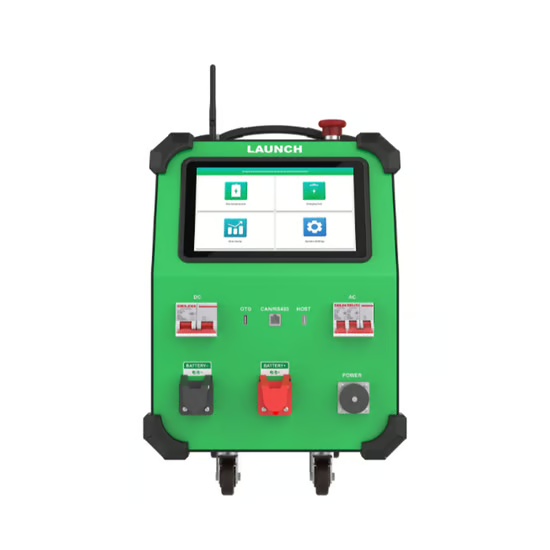
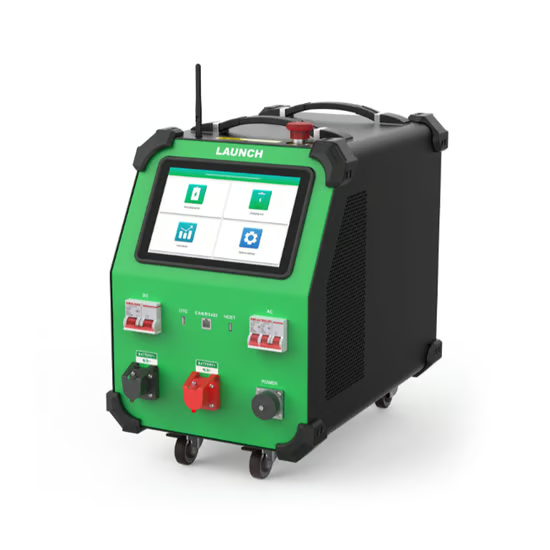
The Launch EVP711 EV Battery Pack Module Charging and Discharging Device is a specialized high‑power service tool engineered for electric vehicle workshops and battery service centers.
It’s designed to perform controlled charging and discharging maintenance on individual EV battery pack modules — helping balance voltages between cells, prepare new or replacement modules for installation, and support in‑depth battery system service work.
Using advanced charge/discharge technology, the EVP711 safely handles lithium‑ion and nickel‑metal hydride battery chemistries while minimizing risk to the battery management system (BMS) during maintenance. Its wide voltage range and multiple operating modes allow customization for different battery module requirements, and built‑in safety protections guard against reverse polarity, overcurrent, overvoltage, high temperature, and fan failure conditions. With real‑time monitoring, user‑defined parameters, and a clear 10.1″ LCD interface, technicians can set and observe voltage, current, temperature, and state‑of‑charge details throughout the process and ensuring efficient and safe module conditioning and repair preparation